Use It Before You Lose It: Smart Ways to Spend Your HSA or FSA Before Year-End
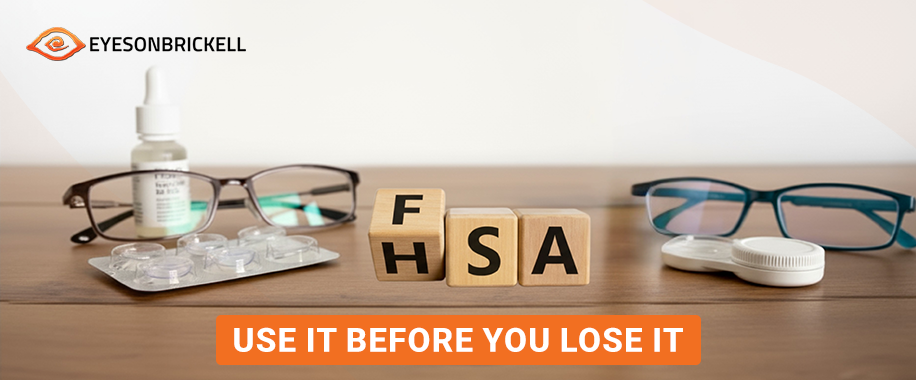
As the year winds down, many people overlook a powerful benefit they already have: pre-tax healthcare dollars in their Health Savings Account (HSA) or Flexible Spending Account (FSA). These funds are yours to use, and if you don’t act, you could leave money on the table.
If you’ve been thinking about advanced eye care treatments, whether it’s myopia control with ortho-k lenses, dry eye therapy (IPL/RF), specialty lens fittings like scleral lenses or aesthetic treatments like lash-lift with Latisse or Upneeq, now is the time to turn your benefits into results.
Here’s your complete guide: how HSAs & FSAs work, key deadlines, what eye care treatments qualify, and smart moves to maximise your benefits before year-end.
HSA vs. FSA: What’s the Difference?
HSA (Health Savings Account)
- Must be paired with a high-deductible health plan (HDHP).
- Contributions, earnings and qualified withdrawals are all tax‐advantaged.
- Unlike FSAs, unused funds roll over year to year and the account stays with you even if you change jobs.
- Important rules apply: e.g., if you’re covered by a general-purpose FSA or certain health plans, you may lose HSA eligibility.
FSA (Flexible Spending Account)
- Set up through your employer, and you contribute pre-tax money.
- You can use it for qualified medical/vision/dental expenses for you, your spouse and any eligible dependents.
- Beware: Many FSAs operate under a “use it or lose it” rule, unless your employer offers a grace period or small carryover.
Key difference summary:
- HSAs = great for long-term savings, roll-over, built for HDHPs.
- FSAs = shorter-term benefit, immediate deduction, but more time-sensitive.
Note: You generally can’t contribute to both a full healthcare FSA and an HSA in the same year unless the FSA is a limited-purpose FSA (vision/dental only).
Year-End Deadline Alert: Why you need to act now
Since we’re now in Q4, here are the critical reasons to pay attention:
- If you have an FSA, check whether you have a grace period (often up to 2 1⁄2 months after year end) or if you’re allowed a small carryover (for example up to ~$660 for some plans).
- If you don’t use your FSA funds (and no carryover/grace), you may lose them—i.e., “use it or lose it”.
- Even with an HSA, while you roll over the funds, it makes sense to use your available dollars for treatments you’ve been postponing (especially if deductibles or insurance-benefit timeframes apply).
- For treatments like optics, lenses, vision procedures, aesthetic eye treatments, budgeted HSA/FSA dollars can be an excellent match, especially before the end of the year.
- Insurance benefits, employer vision benefits, HSA/FSA spend deadlines often align with year-end usage. If you don’t book now, you may miss out.
Tip for Brickell/Miami patients: If you live in or near Brickell and have been putting off a specialised eye treatment, doing it in November or December can help you maximise both your calendar-year benefits and tax-savings.
Eye-Care Treatments That Qualify for HSA/FSA Dollars
Since your practice offers a range of specialised eye-care and aesthetic treatments, here’s how you match them to HSA/FSA eligible spending:
According to trusted sources, eligible medical/vision/eye-care expenses include:
- Eye exams, corrective lenses, contact lenses, LASIK/laser eye surgery.
- Vision-care supplies (e.g., contact lens solution, specialty lenses) and treatment for medical eye conditions.
- Dry eye treatments, medically necessary devices or therapies (if documented). (While not every aesthetic or “nice to have” procedure qualifies, many medically necessary treatments do.)
- Items like Scleral lenses for corneal conditions may qualify if medically necessary and documented.
- For aesthetic eye-enhancement treatments (e.g., lash enhancements with Latisse, eyelid lifting with Upneeq), check with your benefits administrator. Some of these may require a ‘letter of medical necessity’ from a licensed practitioner if they are considered cosmetic.
Smart Ways to Use HSA/FSA for Your Practice Before Year-End
Book Your Comprehensive Eye Exam Early:
- Schedule your yearly or specialized eye exam (dry eye, myopia control, etc.) before December 31.
- Exams, diagnostics, and doctor visits typically qualify for HSA/FSA use.
- Early booking helps you avoid year-end rush and ensures you use current-year benefits.
Invest in Prescription Eyewear or Specialty Lenses
- Use your funds on prescription glasses, contact lenses, or specialty fittings like scleral or ortho-k lenses.
- These are eligible expenses under most plans and help improve your vision comfort and clarity.
- Don’t forget accessories like contact lens solution or prescription sunglasses.
Treat Medical Eye Conditions
Apply your HSA/FSA dollars toward medically necessary treatments like:
- Dry eye therapies (IPL or RF)
- Scleral lenses for corneal irregularities
- Myopia control programs for children and adults
Explore Doctor-Approved Aesthetic Eye Treatments
- Certain treatments such as Upneeq (for droopy eyelids) or Latisse (for lash growth) may qualify with a doctor’s note of medical necessity.
- Check with your benefits administrator for approval before purchasing.
Review Your Remaining FSA Balance
- Log in to your benefits portal and check how much is left in your FSA.
- FSAs are typically “use it or lose it” by Dec 31, unless your employer offers a small carryover or grace period.
- Create a quick plan for spending the remaining balance before it expires.
Use HSA/FSA for Eye Care Supplies
Eligible items include:
- Contact lens cleaning solution
- Eye drops for dryness or allergies
- Eye compresses and cleaning wipes
- Stock up on essentials before the end of the year.
Prepay or Schedule Future Treatments
- If your doctor recommends upcoming treatments, you may be able to prepay before Dec 31 to count toward this year’s FSA.
- This helps secure your appointment and ensures your funds are put to good use.
Ask Your Eye Clinic for Guidance
- Your eye care provider can confirm which services qualify.
- Some treatments require documentation or a “letter of medical necessity” — your clinic can help prepare it.
Don’t Wait Until the Last Minute
- Appointments fill up fast in November and December.
- Call your eye care provider early to use your benefits before the year ends.
Conclusion:
Year-end isn’t just about holiday planning, it’s about smart health-care budgeting. If you have HSA or FSA dollars sitting unused, now is the time to act. At Eyes on Brickell, we specialise in advanced treatments for dry eye, myopia control (children & adults), specialty lenses and eye aesthetics. We’ll help you review your benefit status, see which treatments qualify, and schedule your visit before the year-end rush. Don’t let your benefits go to waste, use them, benefit your vision, and boost your comfort and confidence.
Visit 2885 SW 3rd Ave, Suite 100, Miami, FL 33129 and book your appointment Today!
Use your HSA/FSA before it expires
Book your eye exam today!
Make An Appointment
Faq’s
1. What’s the difference between an HSA and an FSA?
- An HSA (Health Savings Account) is a personal savings account paired with a high-deductible health plan, and your funds roll over every year.
- An FSA (Flexible Spending Account) is employer-sponsored and usually follows a “use it or lose it” rule; unused funds typically expire at the end of the plan year.
2. What happens if I don’t use my FSA funds by December 31?
If your plan doesn’t offer a grace period or carryover option, your unused FSA funds will expire. It’s important to book your eye exam or purchase eligible vision products before the year ends.
3. What eye care services are eligible for HSA or FSA use at Eyes on Brickell?
You can typically use your HSA or FSA funds for:
- Eye exams and diagnostic testing
- Prescription glasses and contact lenses
- Ortho-K lenses for myopia control
- Dry eye treatments like IPL or RF therapy
- Specialty lens fittings (Scleral lenses)
- Medically necessary treatments prescribed by your optometrist
4. Can I use my HSA/FSA for Latisse or Upneeq?
Yes, in certain cases. If your doctor provides a Letter of Medical Necessity, these may qualify as eligible expenses. We recommend checking with your benefits administrator before purchase.
5. Are prescription sunglasses eligible under HSA/FSA?
Yes! Prescription sunglasses that correct vision are eligible. However, non-prescription or cosmetic-only sunglasses do not qualify.
6. Can I prepay for treatments to use my FSA funds before they expire?
In many cases, yes. As long as the payment is made before December 31, it can count toward your current FSA year, even if the treatment is scheduled for early next year. Check your plan’s policy for confirmation.
7. Can I use my HSA or FSA to pay for family members’ eye care?
Yes, you can use your funds for your spouse or eligible dependents’ qualified eye care expenses, even if they’re not covered under your insurance plan.
8. What documentation should I keep for HSA/FSA eye care expenses?
Always keep your receipts, invoices, and doctor’s prescriptions for your records. Some plans or tax filings may require proof that the expense was medically necessary.
9. Do I need a referral to use my HSA/FSA for vision treatments at Eyes on Brickell?
No referral is needed! You can directly book your appointment with our clinic. We’ll provide itemized receipts and help you confirm which services qualify under your benefits.
10. When should I schedule my appointment to make sure I don’t lose my benefits?
We recommend booking your visit in November or early December, as appointments fill up quickly during the year-end rush. Using your benefits now ensures you won’t lose valuable pre-tax dollars.