Ortho-K Lenses Near Me: The Complete Miami Guide to Overnight Vision Correction
If you’ve typed “ortho k lenses near me” into Google, you’re probably tired of glasses fogging up in the Miami humidity, contacts drying out by 3 p.m., or watching your child’s prescription climb every year. Ortho-k offers a different path: you wear a custom lens overnight, and you wake up seeing clearly no glasses, no daytime contacts, no surgery.
This guide covers exactly what ortho-k is, how it stacks up against traditional contact lenses and LASIK, what it costs, what the first night actually feels like, and how to find a qualified ortho-k provider near you in Miami.
What Are Ortho-K Lenses?
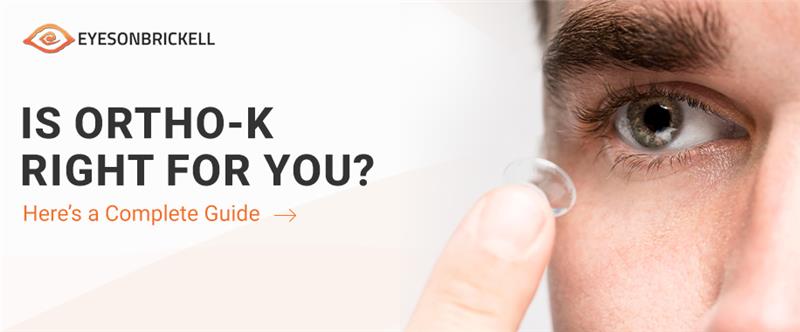
Ortho-K, short for orthokeratology, is a non-surgical vision correction method that uses specially designed, rigid gas-permeable contact lenses worn overnight. While you sleep, the lenses gently reshape the surface of your cornea. When you remove them in the morning, light bends correctly onto your retina, and you see clearly all day without glasses or daytime contact lenses.
Ortho-k lenses are FDA-cleared for overnight wear and are sometimes called corneal reshaping contact lenses, corneal refractive therapy (CRT), or vision shaping treatment, depending on the lens brand your eye doctor uses. The effect is temporary and fully reversible: stop wearing the lenses, and your cornea gradually returns to its original shape over a matter of days.
Ortho-k can correct:
- Myopia (nearsightedness) the most common and best-studied use
- Mild astigmatism
- Some cases of hyperopia (farsightedness) and presbyopia, depending on your prescription
It’s also one of the most widely used tools for myopia management in children, where the goal isn’t just clear vision today but slowing how fast a child’s prescription worsens over time.
How Ortho-K Lenses Work
The process starts with corneal topography, a quick, painless scan that maps the exact curvature of your eye. Your optometrist uses that map to design a lens unique to your eyes. Most patients go through a short fitting phase using a series of lenses (often up to three) before landing on the final “retainer” lens that maintains your vision long-term.
Here’s the general timeline patients can expect:
- Comprehensive eye exam and corneal mapping: determines whether you’re a good candidate and captures the measurements used to design your lenses.
- Custom lens fitting: your first pair of ortho-k lenses is ordered and fitted to your specific corneal shape.
- First night of wear: you sleep in the lenses for 6–8 hours; most patients notice a meaningful improvement in vision the very next morning.
- Adaptation period (roughly 1–2 weeks): vision continues to sharpen and stabilize with consistent nightly wear. Lower prescriptions often stabilize faster; higher prescriptions can take closer to two weeks.
- Nightly maintenance: once your vision stabilizes, you continue wearing the lenses nightly (some low-prescription patients can eventually go every other night) to keep the correction in place.
What to Expect Your First Night (Does Ortho-K Hurt?)
This is one of the most common questions we hear, and the honest answer is: it shouldn’t hurt. Most people feel some lens awareness for the first 10–20 minutes after insertion a mild pressure or “something’s there” sensation which fades as the eye relaxes and settles in before you fall asleep. True pain, sharp discomfort, or light sensitivity that doesn’t resolve is not normal and is a reason to contact your eye doctor.
By the end of the first week, most patients stop noticing the lenses at all. If you’re anxious about this part, it’s worth asking your provider directly how they handle the adaptation period during your consultation. A good clinic will walk you through it and stay reachable if something feels off.
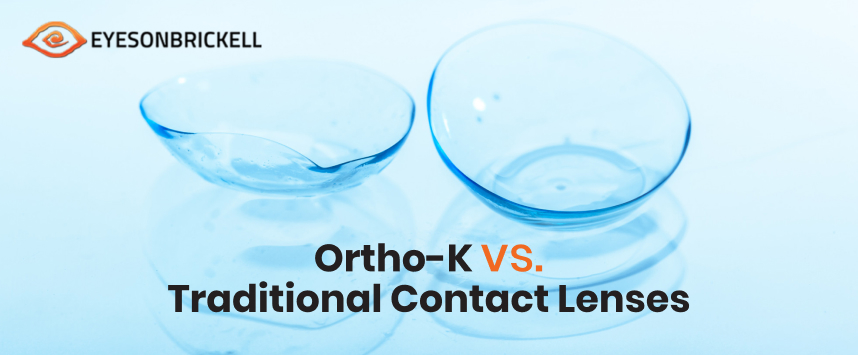
Ortho-K vs. Traditional Contact Lenses
Both correct your vision, but they solve the problem in fundamentally different ways.
| Comparison Factor | Ortho-K Lenses | Traditional Contact Lenses |
|---|---|---|
| When worn | Overnight, while sleeping | During the day |
| How it works | Reshapes the cornea temporarily | Sits on the eye to focus light directly |
| Daytime experience | No lenses or glasses needed | Lenses must be worn all day to see clearly |
| Myopia progression | May help slow progression, especially in children | Does not slow progression |
| Upfront cost | Higher (custom fitting + lenses) | Lower per pair, but ongoing |
| Ongoing cost | Lower; lenses typically last 1–2 years | Higher daily/monthly replacement adds up |
| Best for | Athletes, swimmers, dusty/dry work environments, kids managing myopia | Anyone who prefers simplicity and lower upfront cost |
| Reversibility | Fully reversible | N/A (no lasting corneal change) |
The right choice comes down to lifestyle. If you want your eyes completely free of anything during the day, sports, swimming, dusty job sites, or you simply dislike the feeling of contacts ortho-k solves that. If you’re comfortable with daytime lens wear and want the lowest possible upfront cost, traditional contacts remain a solid option.
Ortho-K vs. LASIK: How Do They Compare?
Since both are framed as “freedom from glasses,” people searching for ortho-k lenses near me often want to know how it compares to LASIK too.
- Surgery: LASIK is a one-time surgical procedure with a permanent result. Ortho-k is non-surgical and fully reversible.
- Age eligibility: LASIK generally requires patients to be 18+ with a stable prescription. Ortho-k has no age restriction, which is why it’s the go-to option for children and teens who aren’t LASIK candidates yet.
- Cost: Ortho-k’s upfront cost is typically lower than LASIK, though LASIK is a one-time expense while ortho-k involves lens replacement every 1–2 years.
- Commitment: LASIK requires no nightly routine after healing. Ortho-k requires consistent nightly (or near-nightly) lens wear to maintain results.
- Myopia control: Ortho-k has a specific, well-documented role in slowing myopia progression in children, something LASIK isn’t used for at all, since it isn’t performed on kids.
Neither option is universally “better”; it depends on age, prescription, budget, and how you feel about surgery versus a nightly lens routine. Our complete LASIK guide breaks down what to expect if you’re weighing both.
Who Is a Good Candidate for Ortho-K?
Ortho-k tends to work best for:
- Mild to moderate myopia, generally up to around -6.00 diopters, with or without mild astigmatism
- Children and teens whose myopia is progressing and who need a non-surgical option to help manage it
- Athletes and swimmers who need clear vision without anything on their eyes during activity
- People in dusty, dry, or high-allergen work environments where daytime contacts are impractical
- Adults who aren’t ready or eligible for LASIK but want freedom from daytime glasses or contacts
Ortho-k is generally not recommended for patients with severe dry eye, active eye infections, or very high refractive errors outside the treatable range your eye doctor will confirm candidacy during a comprehensive exam and corneal mapping.
How Much Do Ortho-K Lenses Cost?
Pricing varies by provider, prescription complexity, and how many lenses your fitting requires, but nationally, ortho-k programs typically range from around $1,000 to $4,000 for the initial exam, custom fitting, and lenses with replacement lenses (usually needed every 1–2 years) costing several hundred dollars. Most vision insurance plans treat ortho-k as elective and don’t cover it fully, though FSA/HSA funds and in-office financing are often available.
While the upfront investment is higher than a box of monthly contacts, many patients find the math evens out over a few years once you factor in what you’d otherwise spend on daily or monthly lens replacements, solution, and glasses backups. The only way to get an accurate number for your specific eyes is a consultation refractive error, corneal shape, and how many trial lenses you need all affect the final price.
How to Choose the Right Ortho-K Provider Near You
Not every optometrist offers ortho-k, and fitting it well takes more training and equipment than a standard contact lens exam. When you’re comparing “ortho k lenses near me” results, look for:
- In-house corneal topography: the mapping technology used to design your custom lenses
- Experience specifically with ortho-k fittings, not just general contact lens fitting
- A clear follow-up schedule: you should be seen after your first night, then again at set intervals as your vision stabilizes
- Transparent pricing: before you commit to a fitting
- A provider you can reach quickly: if something feels wrong during the adaptation period
We go deeper on evaluating a clinic in our guide to choosing the right ortho-k provider for long-term results.
Ortho-K Lenses Near Me in Miami
At Eyes on Brickell, ortho-k is one of our most requested specialty contact lens services for adults who want lens-free days and for parents managing a child’s myopia. Every ortho-k fitting starts with corneal topography and a full eye health exam led by our team, so your lenses are designed for your eyes specifically, not a generic fit.
We’re located at 2885 SW 3rd Ave, Suite 100, Miami, FL 33129, in the heart of Brickell, with in-office follow-up visits throughout your adaptation period. If you’re weighing whether ortho-k fits your lifestyle, our guide on active lifestyle vision correction and our complete “Is Ortho-K Right for You” guide are good next reads. You can also explore our full range of contact lens services or meet our doctors.
Ready to Explore Ortho-K in Brickell?
Whether you’re managing your own prescription or your child’s myopia, the best next step is a comprehensive eye exam and corneal consultation to see if ortho-k is right for your eyes. Book an appointment with Eyes on Brickell and find out what lens-free days could look like for you.
Frequently Asked Questions
Does ortho-k permanently fix vision problems?
No. Ortho-k temporarily reshapes your cornea. If you stop wearing the lenses, your cornea gradually returns to its original shape and your vision returns to baseline over several days.
Is ortho-k safe for children?
Yes, and it’s one of the most common myopia management tools for kids and teens. There’s no minimum age restriction for ortho-k the way there is for LASIK, since it doesn’t involve surgery.
Does ortho-k hurt?
It shouldn’t. Most patients feel mild lens awareness for the first 10–20 minutes that fades before they fall asleep. Real pain or persistent discomfort is not normal and should be reported to your eye doctor right away.
How long until I see results with ortho-k?
Many patients notice improved vision after the very first night. Full, stable correction typically takes 1–2 weeks of consistent nightly wear, depending on your starting prescription.
How much do ortho-k lenses cost compared to traditional contacts?
Ortho-k has a higher upfront cost generally $1,000 to $4,000 for the initial fitting and lenses but lower ongoing costs, since lenses typically last 1–2 years rather than being replaced daily or monthly.
Is ortho-k better than LASIK?
Neither is universally better. LASIK is permanent and surgical; ortho-k is reversible, non-surgical, and available to children, which makes it the better fit for anyone not eligible for or not ready for laser surgery.
Can I search “ortho k near me” and just walk in?
Ortho-k requires a comprehensive eye exam and corneal mapping first; it’s not a same-day, off-the-shelf fitting. Booking a consultation is the right first step.